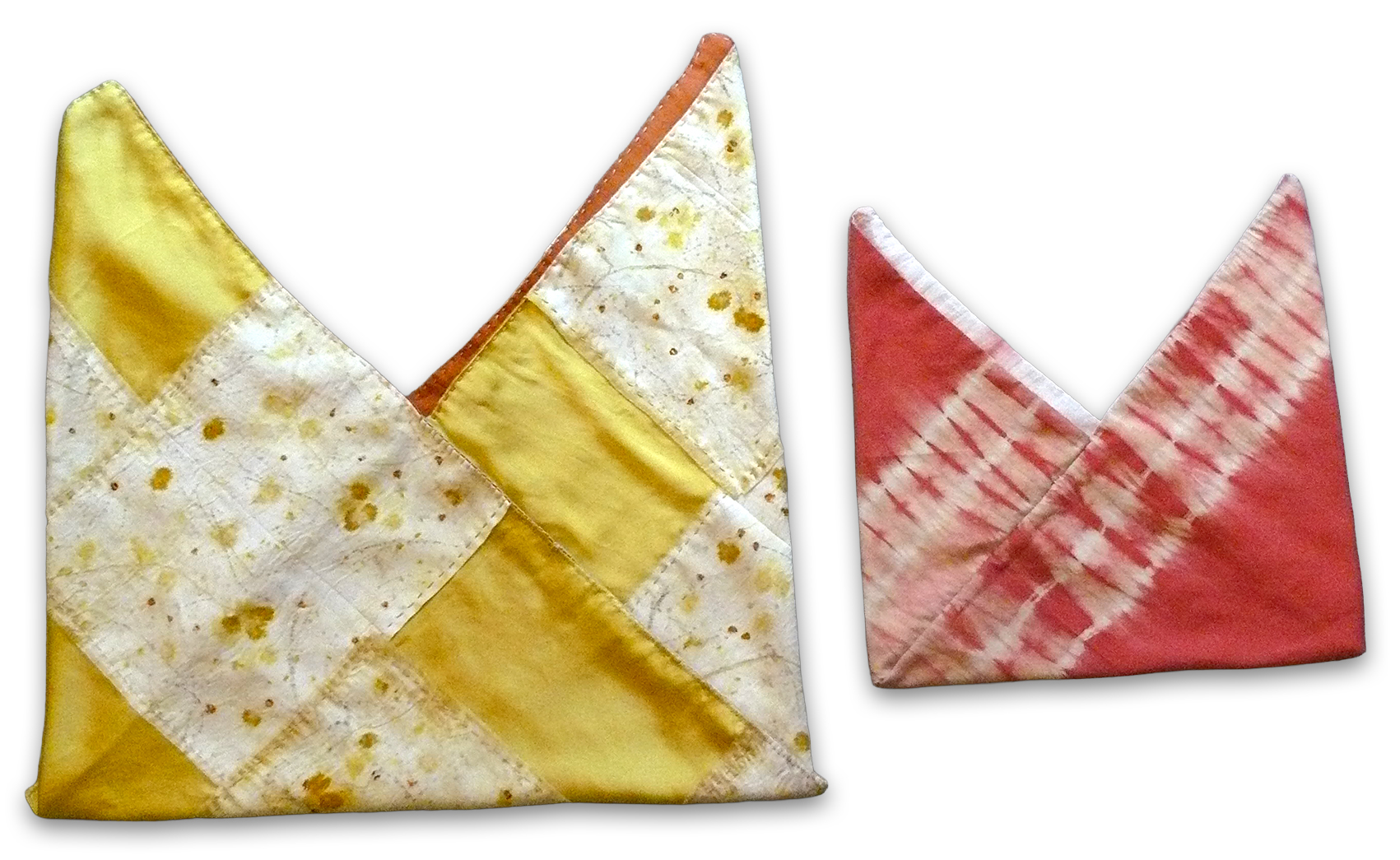
Making an Azuma Bag: from Natural Dyeing to Hand Stitching
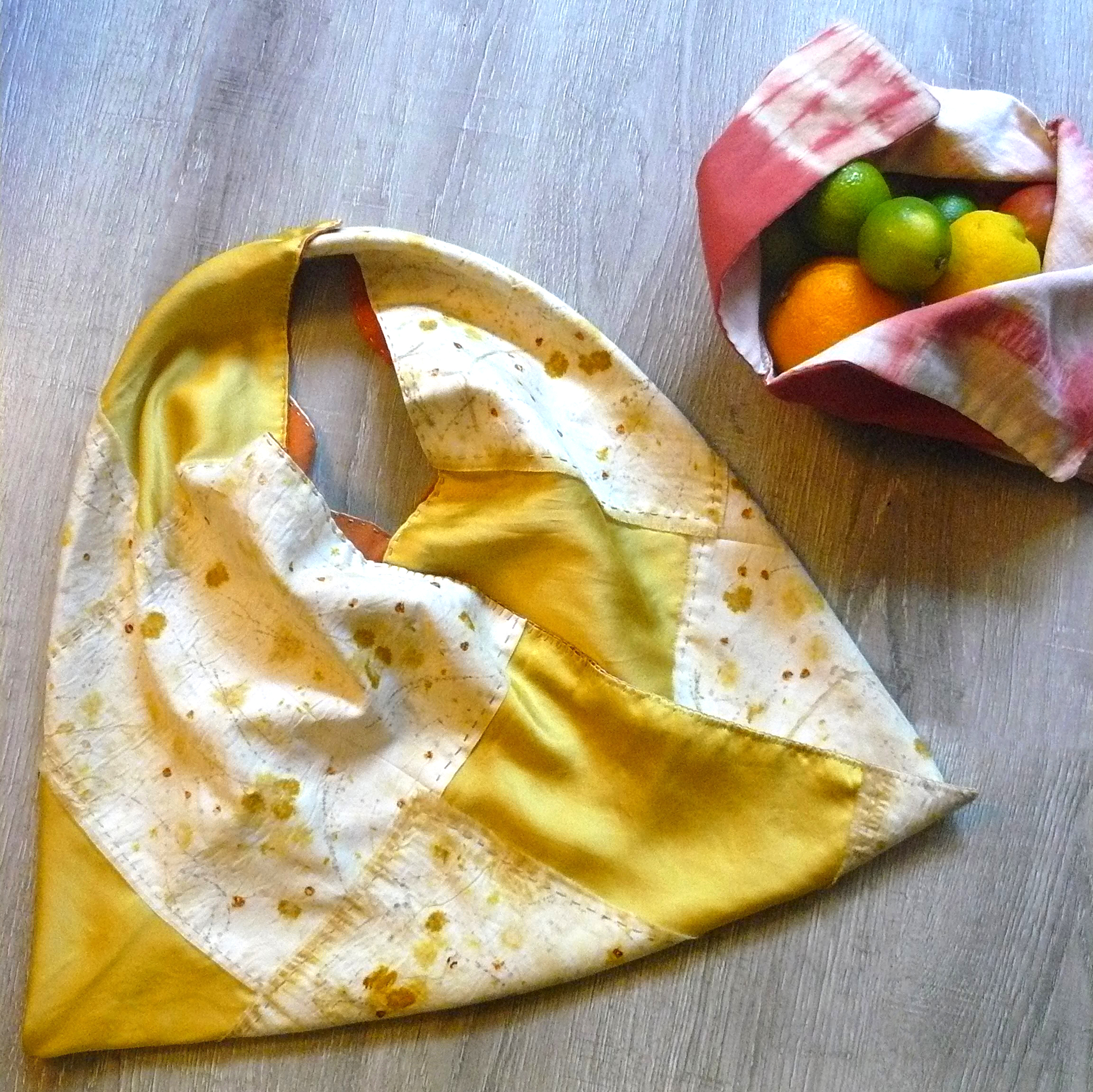
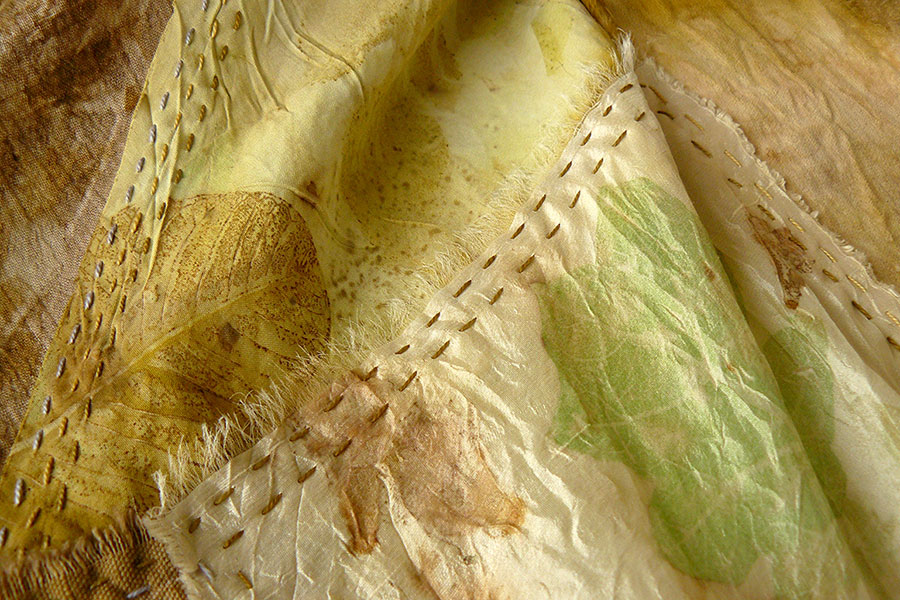
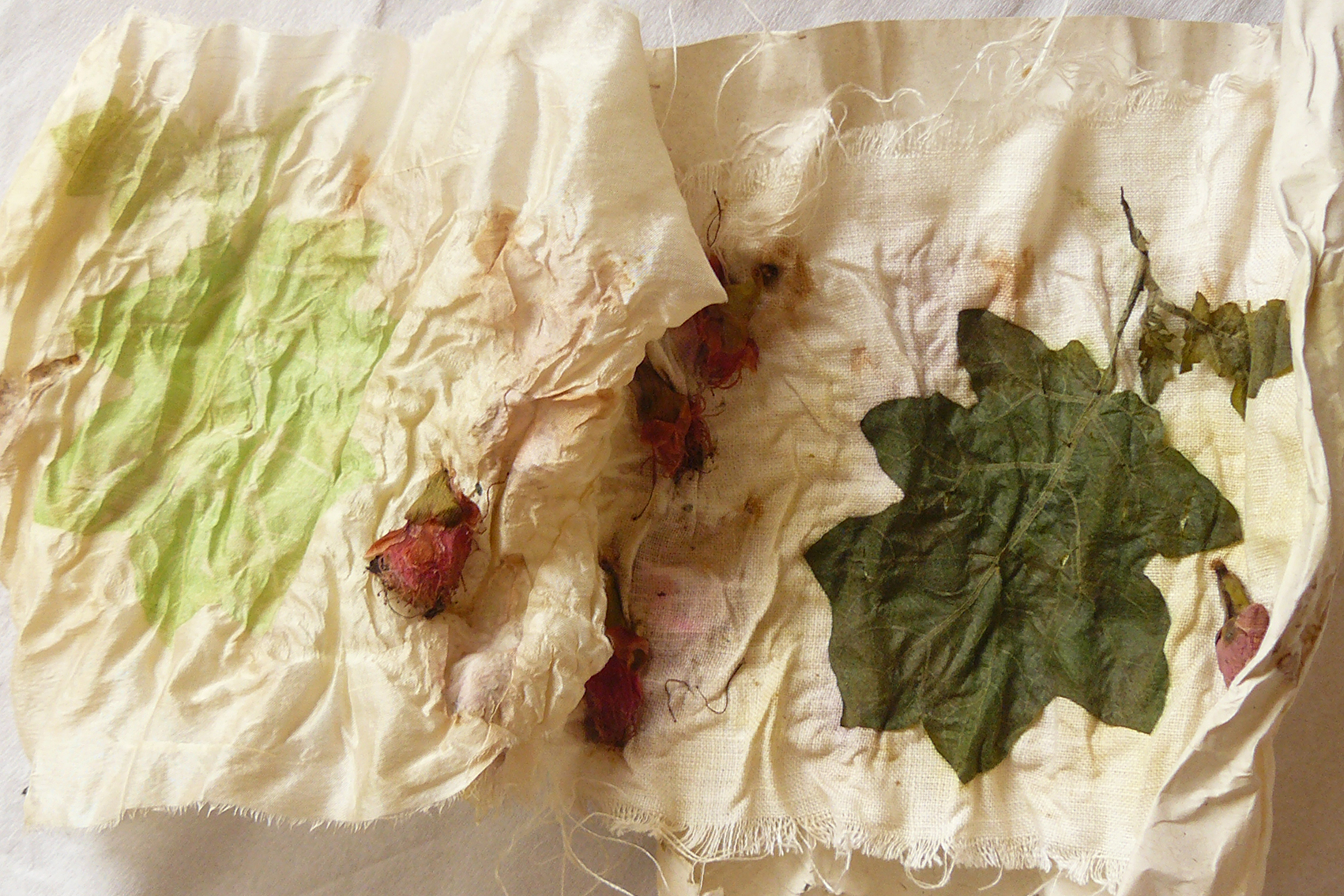
This workshop is an invitation to slow down. Over three days, we will gather around plants, cloth, and thread to transform discarded fabrics into a handmade Azuma bag. Traditionally made from reused tenugui (handkerchief), the Azuma bag—whose name means “from Edo” or “East”—is a simple, sustainable design used to carry a bento (lunch box), groceries, or small personal items. We will walk the streets to gather dye plants, learning how colour lives inside leaves, flowers, and food scraps. Through eco-printing and traditional natural dyeing techniques, fabrics will be upcycled and coloured with plant-based hues. In the final stage, we will stitch everything together by hand, allowing time, care, and stories to shape the final Azuma bag. A workshop about sustainability, mindfulness, and the beauty of making something from beginning to end with our own hands.
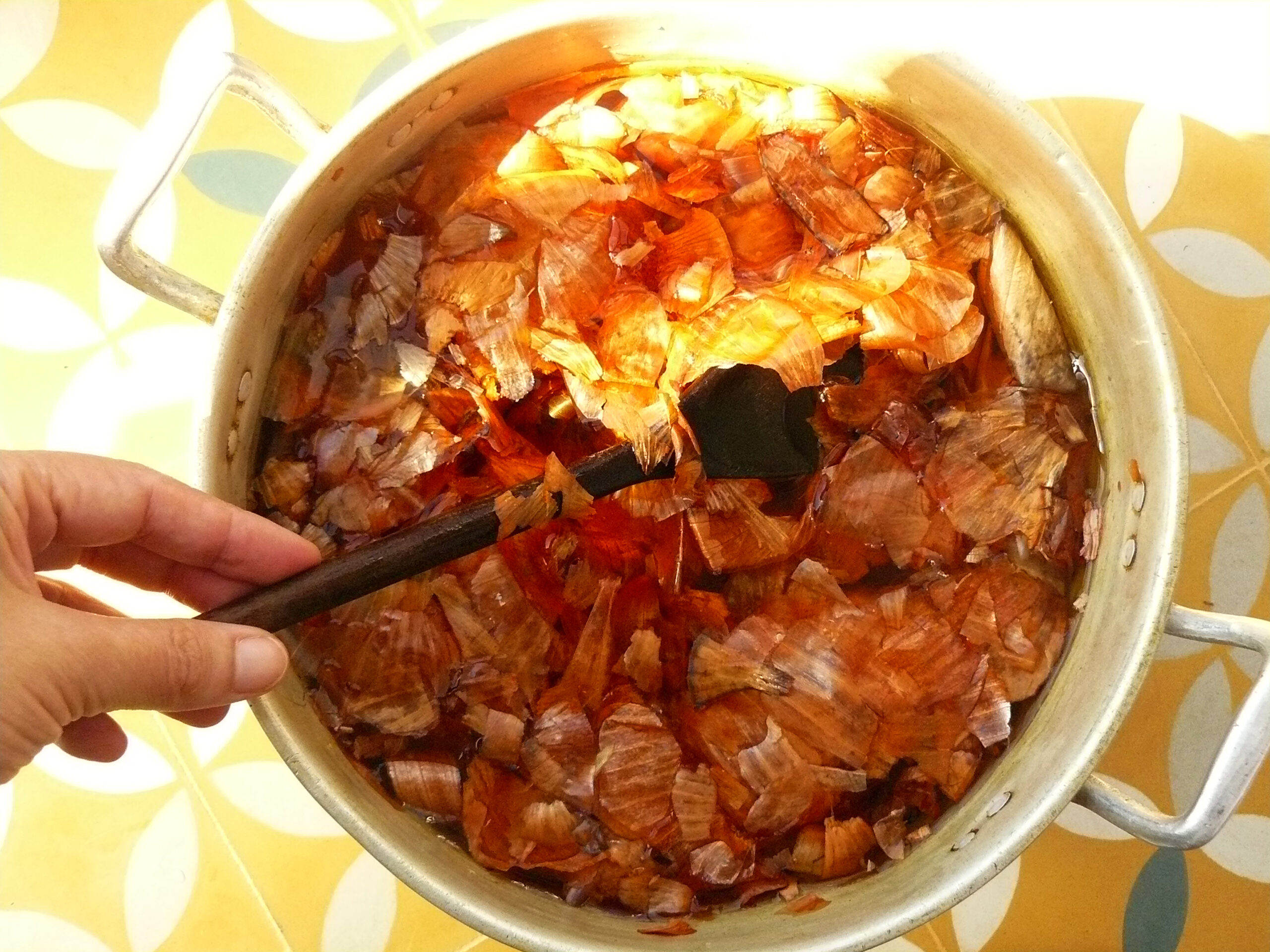
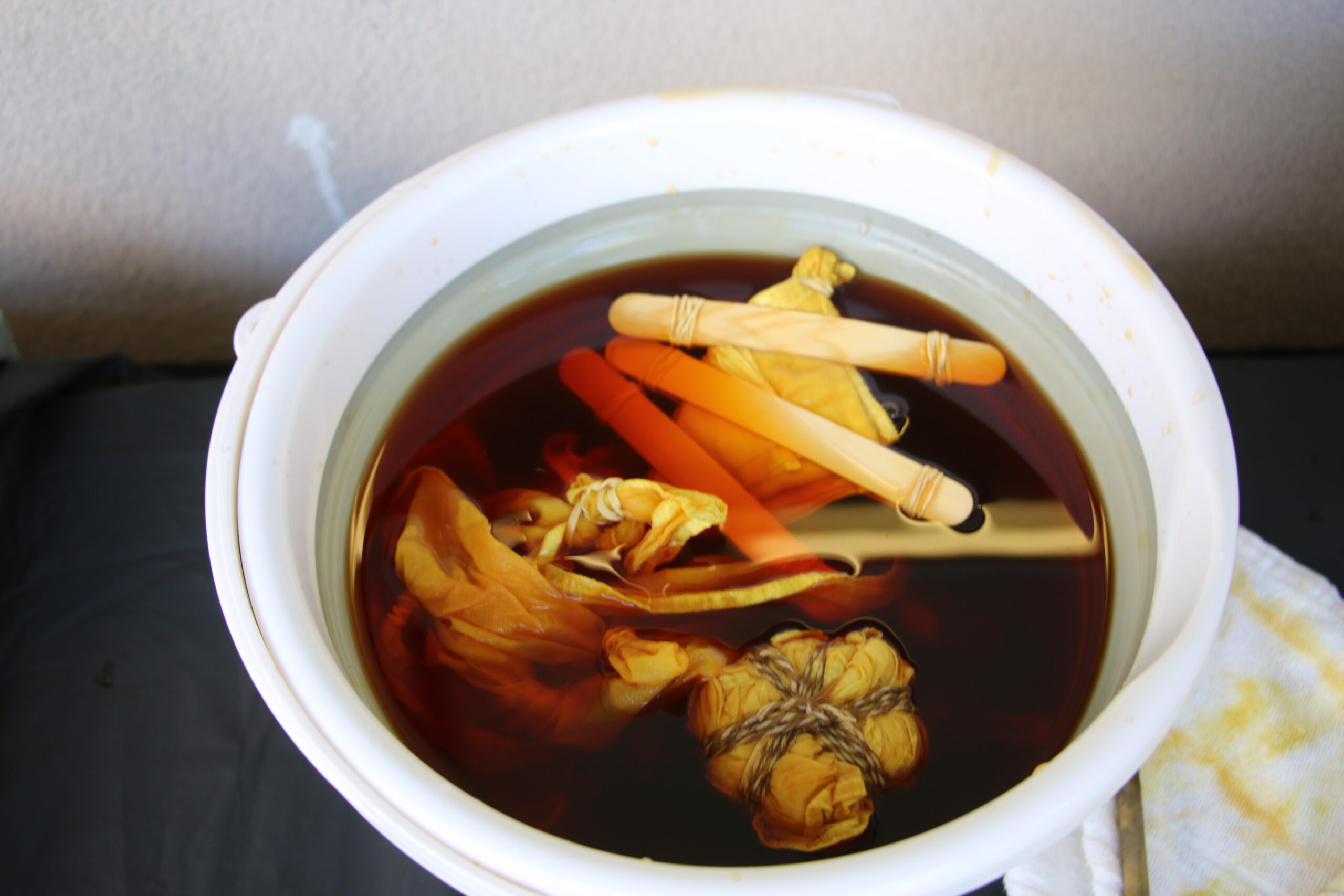
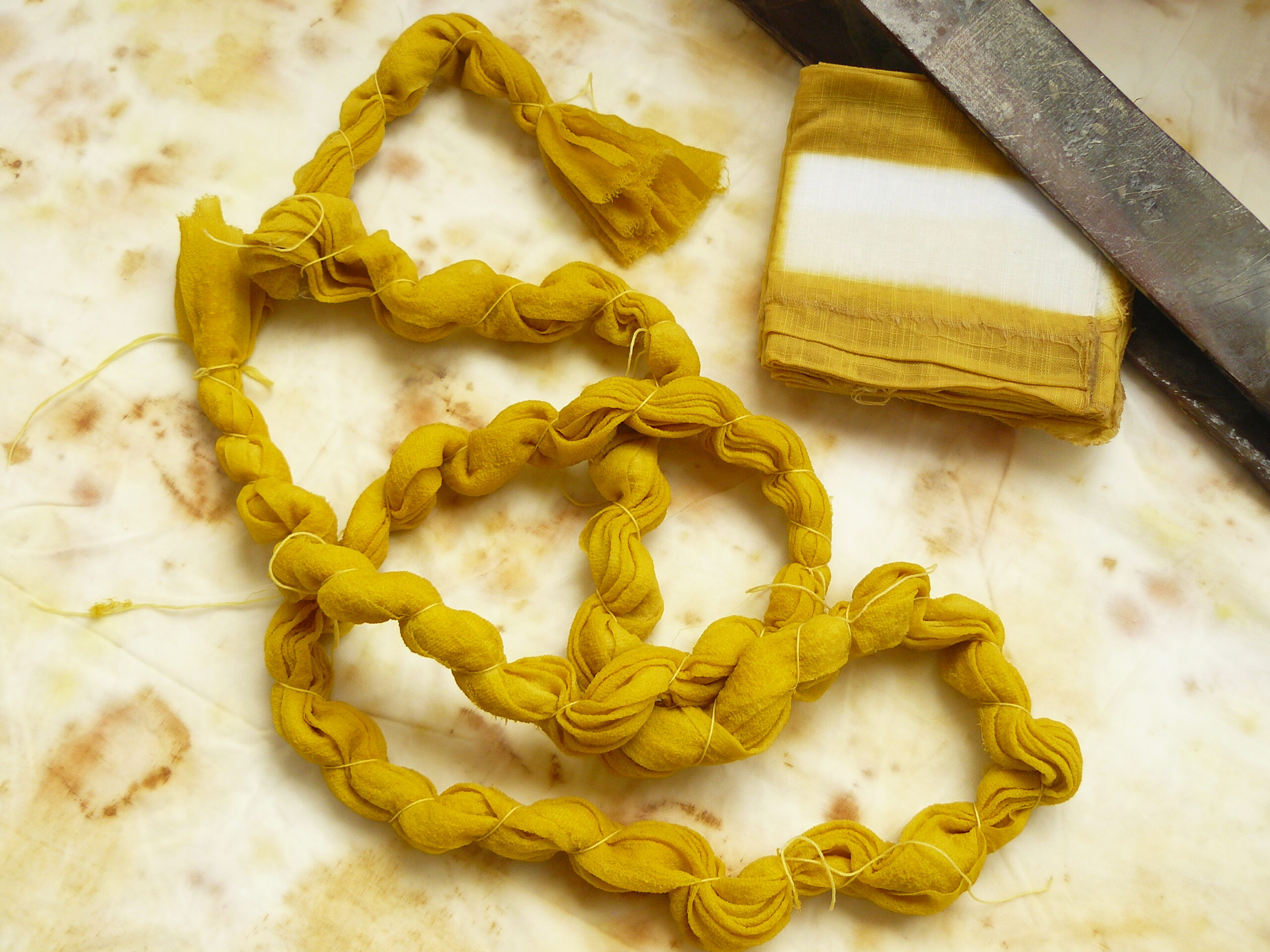
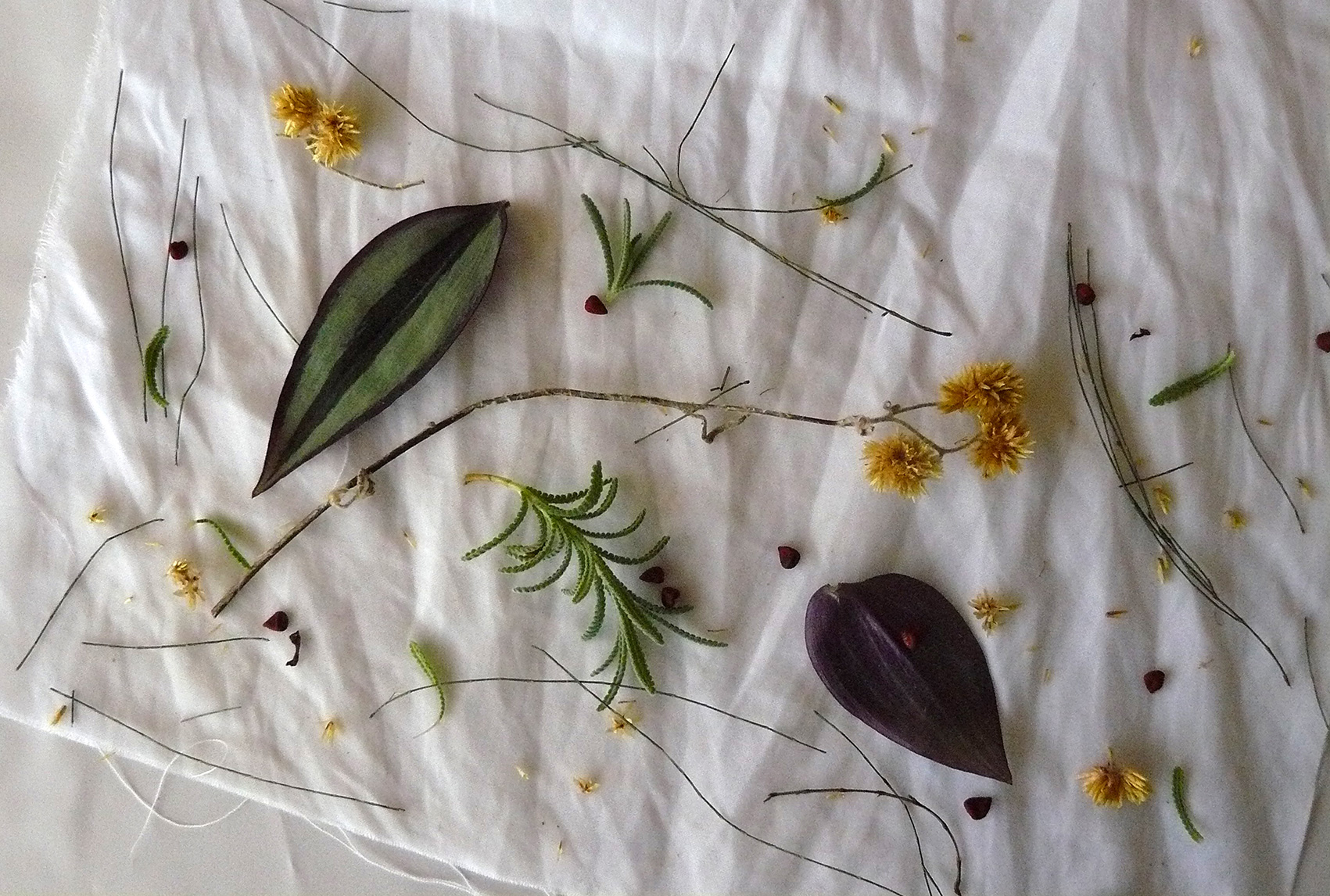
Material
All materials will be provided. Participants are encouraged to bring their own fabrics to use during the workshop.
Program – 3 sessions
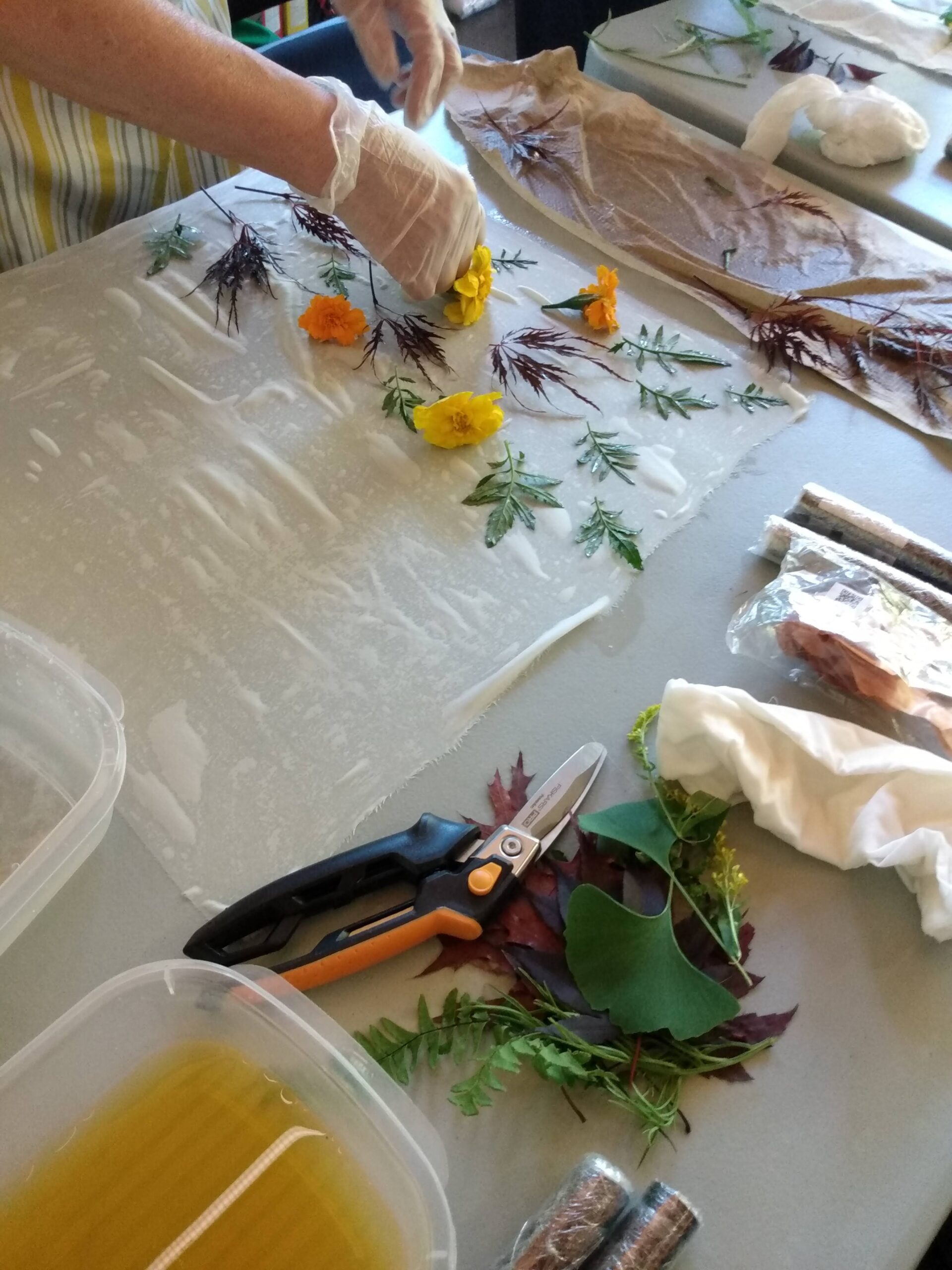
Day 1 – Introduction and First Natural Dyeing Session – Eco-Printing (3 hours)
• Azuma bag samples showcase and overview
• Basics of natural dyeing
• Fabrics and how to prepare them for dyeing
• Plants and how to gather them for dyeing
• Eco-printing
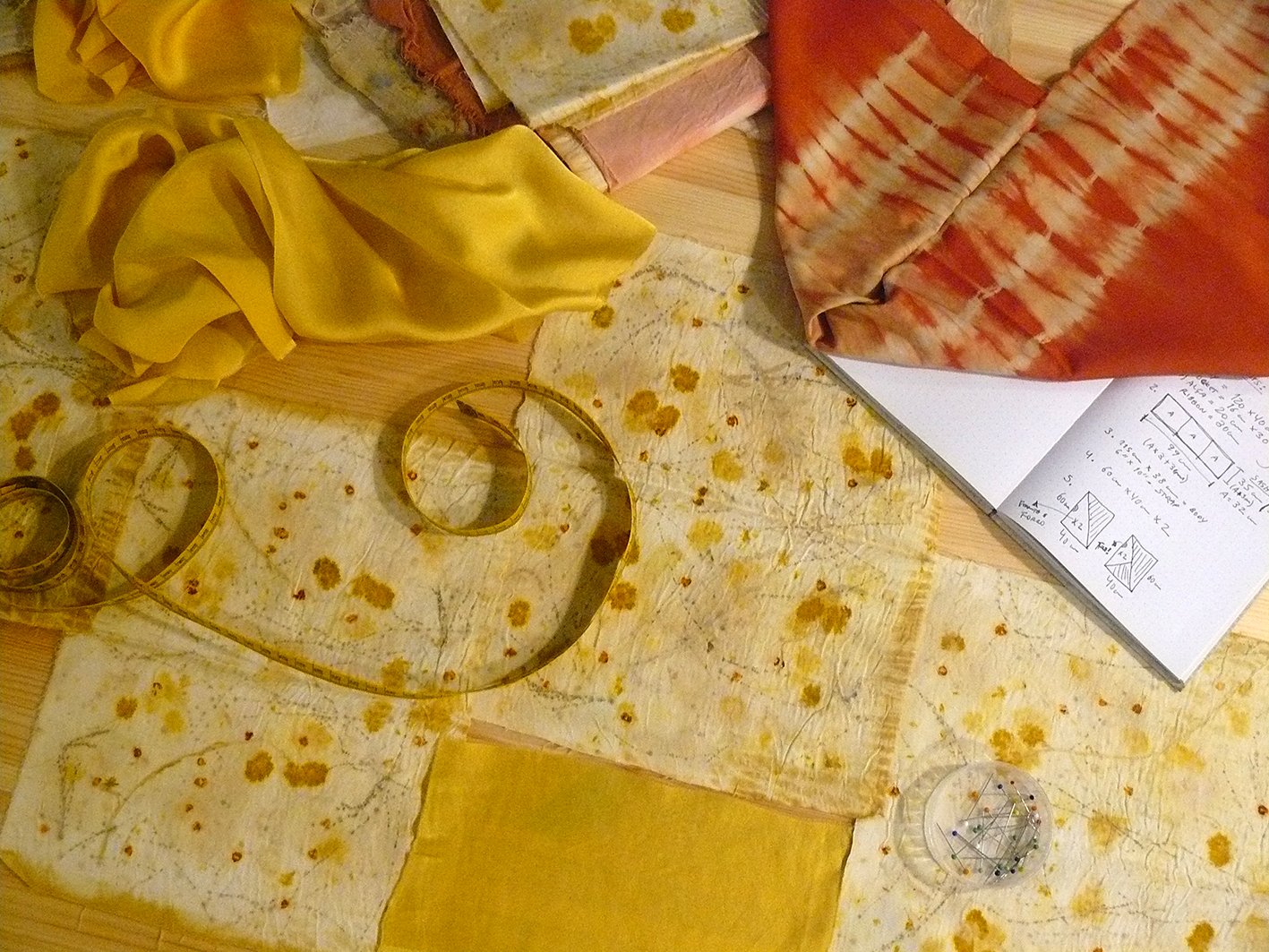
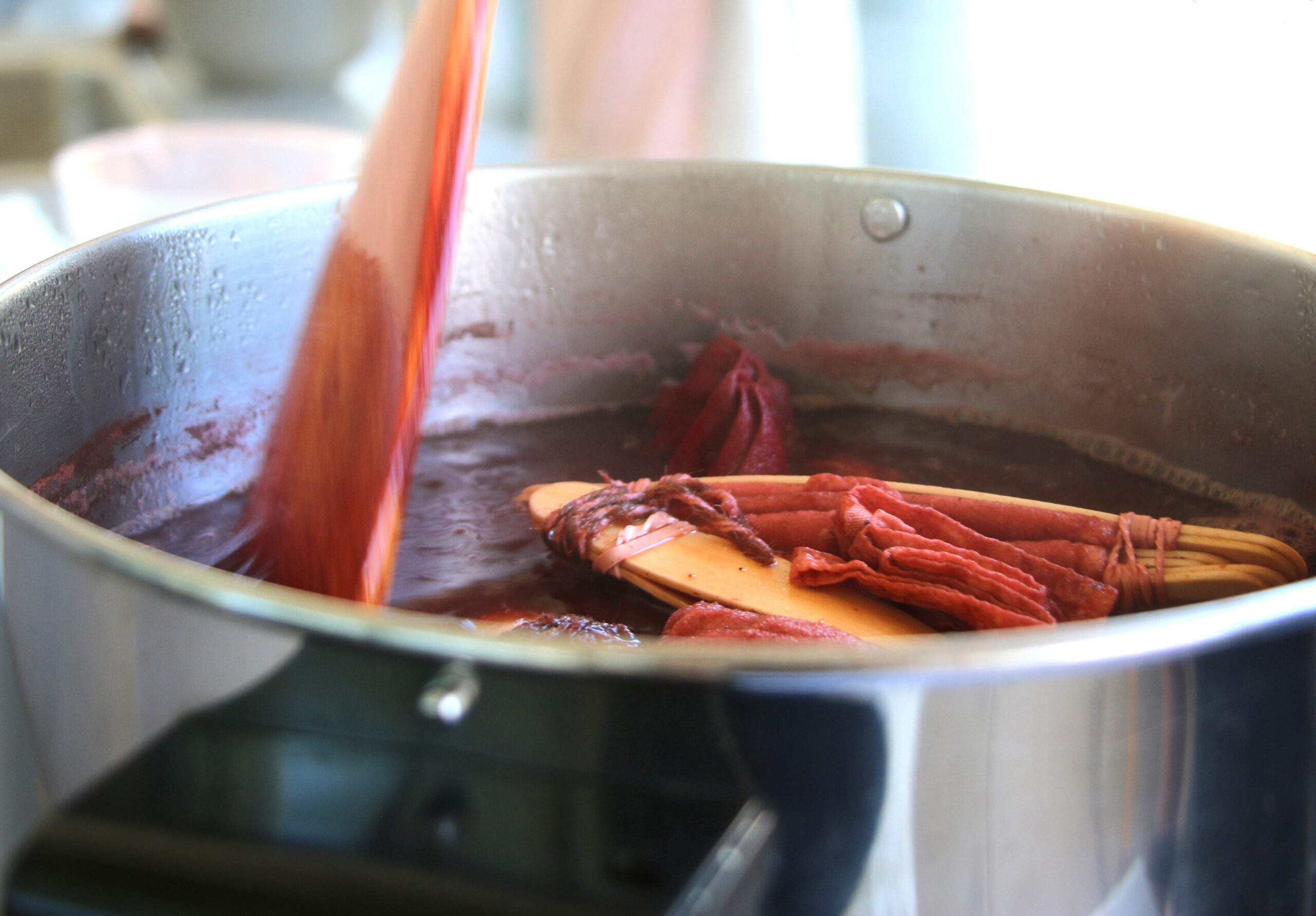
Day 2 – Second Natural Dyeing Session: Solid Colours and Shibori (3 hours)
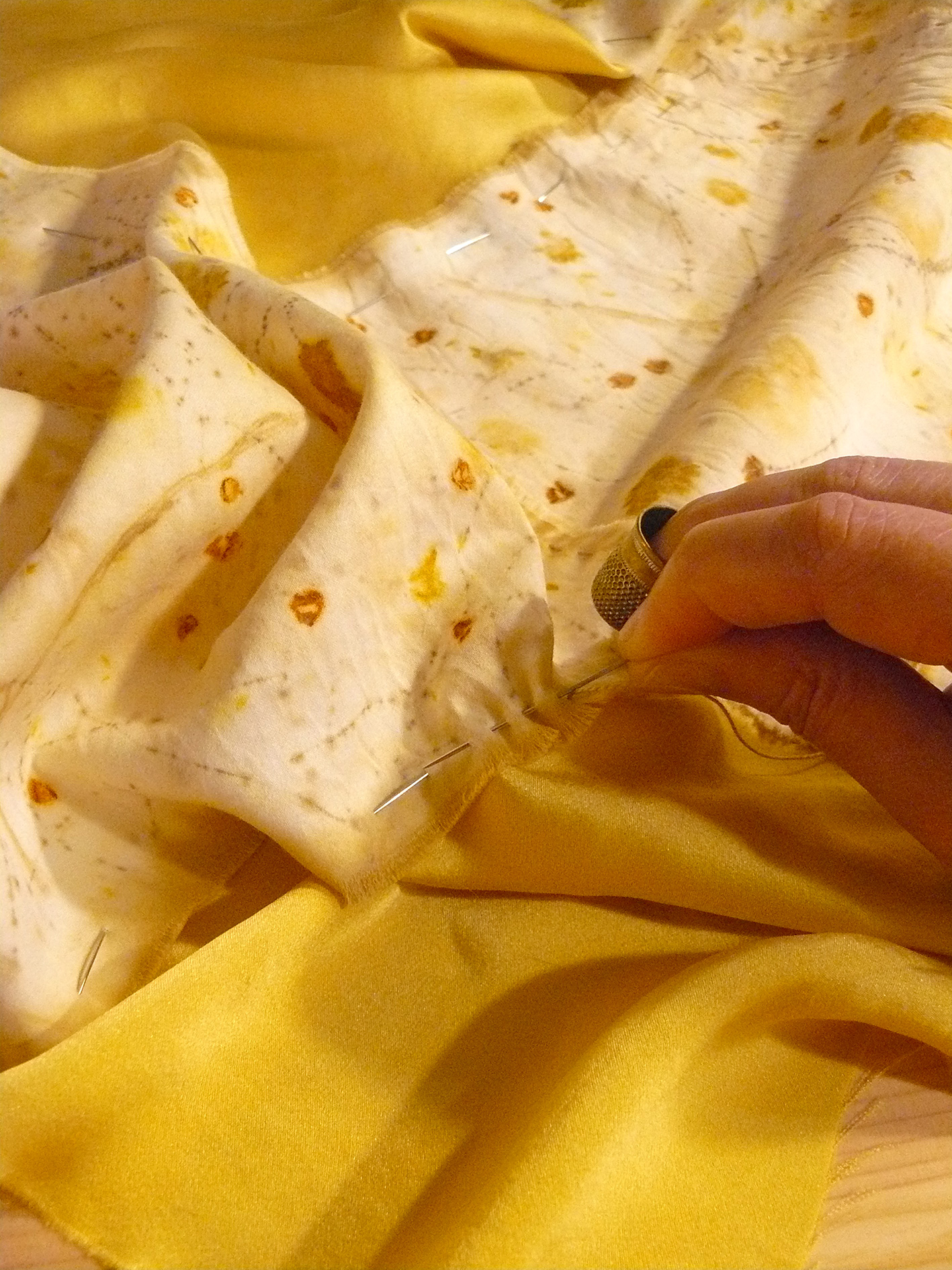
Day 3 – Azuma Bag Construction (3 hours)
• Basics of hand stitching
• Stitching session
Material provided
- Variety of fabrics and scraps
- Vinil gloves
- All material for the dyeing process such as plants, mordants and utensils
- All material to sewn as threads and needles
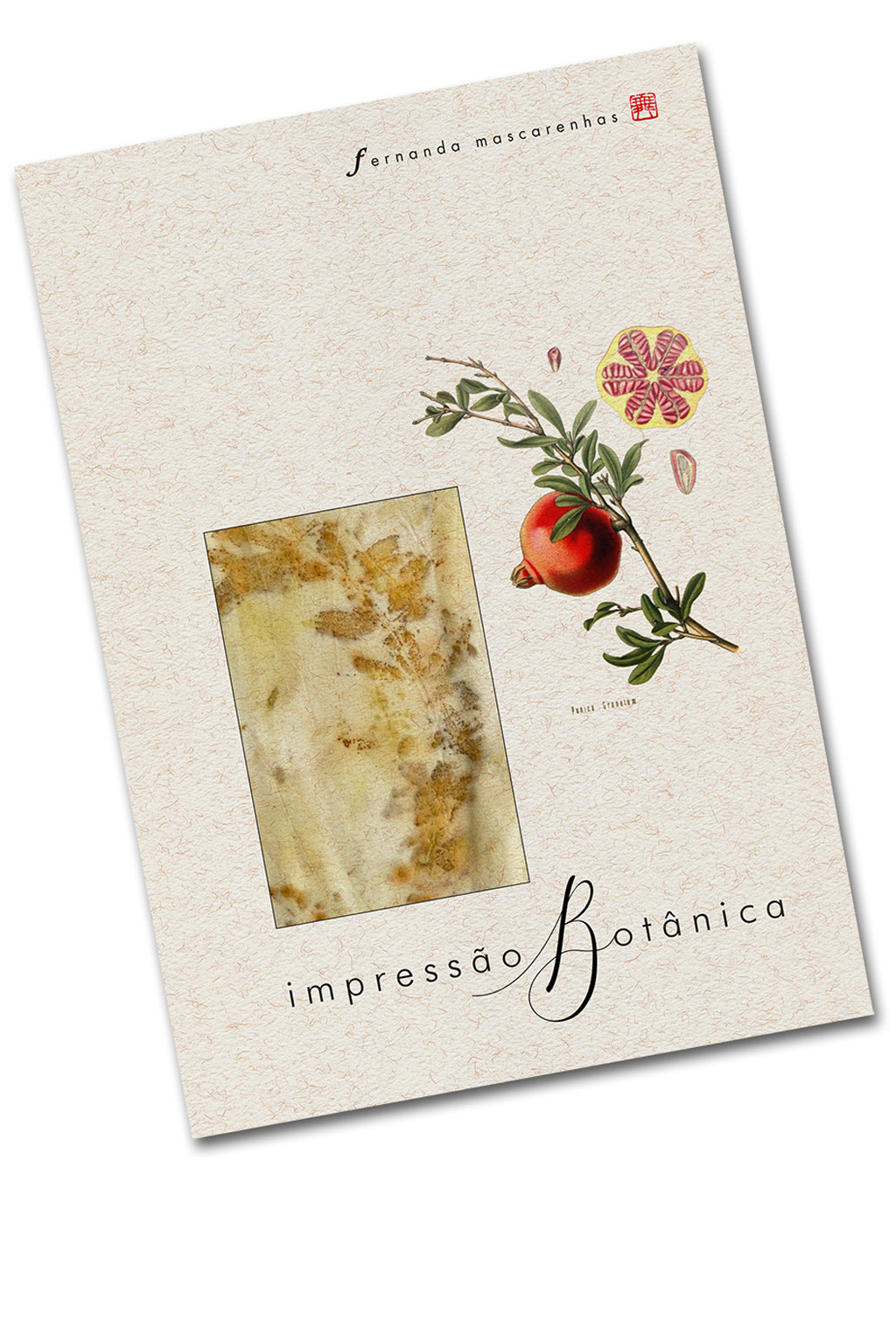
- Booklet Botanical Contact Printing with tutorials and recipes